my biogas plant.
To move a project from inspiration to a bankable reality, we follow a rigorous developmental funnel. The process begins with a one-page Concept Note that defines feedstock and associated logistical challenges, the location, the idea and proposed solution, the potential off-take, and potential ownership and the like.
Before dimensioning and designing a biogas plant and eventually putting a price tag on it we ask a lot of very good questions.
What substrate – what energy ?
We investigate:
- What waste? The physical availability of the targeted organic waste streams (substrate), volume, composition, degree of contamination, and seasonality.
- What energies? The type of energy that is needed and that we intend to produce.
Where? Location – logistic.
We need to get a sense of where it is going to be! Choosing the best location possible for the unit is a very important decision. It differs from case to case, sometimes simple, sometimes difficult with a severe impact on the profitability of the project. The two main criteria are:
- Proximity to waste and substrates.
- Proximity to the user of energies.
- We either transport the substrate, the energies (gas to pipeline), or the digestate, or all of them, transport costs will severely affect the profitability of the project.
- Who pays for transport?
Who?
Several fundamental questions must be clearly addressed before structuring the project:
- Who will own the different project components: the waste streams, the plant and associated infrastructure, the land, and the revenues generated from energy and by-products?
- Who will be responsible for offtaking the energy, fertilizers, and RDF? Under what contractual terms and at what price levels?
- Who will bear the transportation costs for waste input and product distribution?
- What governance structure will apply: who has decision-making authority, and who may have the power to delay or block decisions?
- What is the realistic decision-making timeline? Are there stakeholders who may require several years before being ready to commit?
- What are the main drivers influencing the project: government policy, existing or upcoming regulations, regulatory gaps, odor management concerns, or broader waste management challenges?
For the development of a comprehensive and robust business plan, generizon will raise detailed strategic, technical, financial, and institutional questions and will require clear and well-supported answers. We are fully capable of supporting you in preparing a complete and bankable business plan.
What technology?
Depending on targeted substrate, agricultural waste, Source Separated Organic Waste (SSOW), Organic Fraction of Municipal Solid Waste (OFMSW) or liquid effluents, as well as targeted output (can we use/sell the fertilizer?), we have different options:
- PlugFlow for High Solid Anaerobic Digestion (HSAD), like straw or OFMSW. In the case of OFMSW we have no intention to produce a good fertilizer, we need to have a good plan for the digestate which may be post processed/dried and sold as low quality Refused Derived Fuel (RDF).
- Continuous Steered Tank Reactors (CSTR) AD, for agricultural liquid or semi-liquid substrate or SSOW. This has as inputs properly sourced, clean substrates; fertilizer is of high quality and of organic origin and represents an important soil amendment for agriculture.
- Upflow Anaerobic Sludge Blanket (UASB), is designed for very diluted, high-volume liquids like industrial wastewater (brewery, dairy processing, etc.).
- Simple Covered lagoons for liquids.
- Simple Batch (garage) systems for solids.
- Others.
designing the industrial-scale biogas plant.
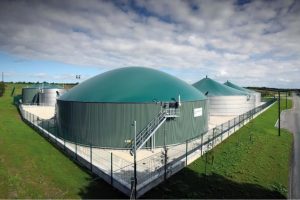
Whatever the technology, in an industrial/technological installation that decomposes organic matter in the absence of air to produce biogas (i.e. anaerobic digestion, AD) we usually think about four different process streams:
- Feedstock pretreatment: Preparation and conditioning of the incoming substrates (sorting, size reduction, homogenization, impurity removal, moisture adjustment, etc.).
- Anaerobic digestion (fermentation) process: The core biological process in which microorganisms convert organic matter into biogas under controlled anaerobic conditions.
- Biogas treatment and utilization: Cleaning, conditioning, and conversion of biogas into usable energy forms such as electricity, heat, steam, or upgraded biomethane fuel.
- Digestate post-treatment: Management and valorization of the residual digestate, including dewatering, drying, stabilization, or further processing depending on the intended end use.
pretreatment – preparation of substrate inputs.
Managing the intake of biodegradable waste is a complex balancing act, as substrates vary significantly in energy density, moisture content, seasonality, and contamination levels. To transform this unpredictable raw material into a steady energy source, a sophisticated front-end process is required before the waste ever reaches the anaerobic digester.
- Reception and storage: Waste varies by season, energy content, and moisture. Facilities use specialized pits and tanks to manage these fluctuations and ensure a steady supply for the anaerobic digester’s recipe.
- Pretreatment and cleaning: Before digestion, all or most contaminants (glass, stones, metal, plastic) must be removed to protect equipment. Size reduction occurs through bag openers, shredders, and grinders (e.g., Rotacut) to break down solids. Homogenization is helped by systems like MultiMix that blend various inputs into a uniform, humidified slurry.
- Dosing and inoculation: For the formulation of a recipe solid feeds are weighed in hoppers to maintain the correct nutrient balance. Liquids are added and the substrate is often pre-inoculated with active digestate to jump-start the biological process.
- Controlled feed-in: Programmable pumps, automatic valves, or Archimedes’ screws deliver the substrate. Depending on the design, material is injected at the top, middle, or bottom, often utilizing recirculation to maintain stability.
fermentation / anaerobic digestion – the actual process stages inside the AD.
The biological limits of the substrate recipe are the primary drivers of reactor sizing. To dimension the system effectively, we balance these three critical metrics:
- Hydraulic Retention Time (HRT in days), the average time substrate is retained in the digester ensures that microbes have enough time to digest the organic matter.
- Organic Loading Rate (OLR in kg VS/m3/day) defines the speed that organic dry matter ODM (volatile solids DS) passes through and hence bacterial stress.
- N-loading rate: Too much N creates ammonia toxicity (NH3 inhibition), diluting enough is essential.
Inside the reactor, anaerobic digestion (AD) relies on a delicate biological universe where four distinct microbial groups must coexist in harmony.
The four stages of anaerobic digestion:
- Hydrolysis: Complex organic matter (fats, proteins, carbohydrates) breaks down into soluble compounds.
- Acidogenesis: Soluble compounds are converted into volatile fatty acids (VFAs) and alcohols.
- Acetogenesis: These intermediates are further refined into acetic acid, hydrogen, and CO2.
- Methanogenesis: Specialized archaea convert these final precursors into methane (CH4).
To maximize biogas production, these overlapping phases must occur simultaneously and at balanced rates.
Maintaining biological equilibrium:
Stability is the golden rule of AD. Because these bacterial families adapt slowly to one another, the system is highly sensitive to external shocks.
The risk of inhibition:
If one stage outpaces another—for example, if acid-forming bacteria work faster than methane-formers—undesirable intermediate substances accumulate. This leads to inhibition, which can cause a catastrophic sour digester and halted gas production.
Constant parameters:
To prevent disruptions, we must maintain strict consistency in:
- Feedstock recipe: Avoid sudden changes in substrate type or volume.
- Temperature: Even minor fluctuations can stress the microbes.
- pH value: Must be kept stable to prevent acid buildup.
Separation of stages or not?
Separating the phases into a two-stage system is often technically superior but more complex and expensive. In a single tank, all microbes share one environment. Separating them allows to optimize for two very different biological needs:
- Acidification Stage (Hydrolysis/Acidogenesis): Fast-acting bacteria that prefer a lower pH (5.5–6.5).
- Methane Stage (Methanogenesis): Slow-growing, sensitive archaea that require a neutral pH (6.8–8.0).
Separating the anaerobic digestion stages offers a stability which brings a higher methane concentration and yield, particularly when processing high-energy substrates. However, these technical advantages are balanced by higher capital costs for a dual-tank system with more complex plumbing, and monitoring of transfer rates between the acidification and methanogenesis phases. Ultimately, deciding between a single or two-stage system is as much a philosophical choice as a technical and economic one.
Mesophilic or thermophilic?
Operating temperature determines the speed and stability of the digestion process:
- Mesophilic (35°C – 40°C): The industry standard. It is highly stable and energy-efficient but requires longer retention times.
- Thermophilic (50°C – 55°C): Faster reaction times and superior pathogen destruction (sanitization). However, it is more sensitive to temperature fluctuations and requires higher energy inputs.
Steered or non-steered?
Steering refers to the level of active management over the biological process:
- Steered (Active): Uses mechanical mixing, heating, and precise recipe dosing to maximize efficiency. This ensures microbes are always in contact with “food,” prevents crusting, and allows for much higher gas yields.
- Unsteered (Passive): Relies on natural flow and ambient conditions (e.g., a simple covered lagoon). While cheaper and simpler, it is far less efficient and prone to sludge buildup or inconsistent gas production.
Industrial scale plants are steered for predictable ROI; simple farm systems are often unsteered to save on costs.
Insulated or non-insulated?
Isolation (insulation) is about maintaining a constant thermal environment for the bacteria.
- Isolated (Insulated): Tanks are wrapped in thermal insulation (like mineral wool or foam) to prevent heat loss. This is essential for steered systems (Mesophilic or Thermophilic) to maintain the “biological equilibrium” regardless of the outside weather.
- Non-Isolated: The tank has no thermal protection. The internal temperature fluctuates with the ambient environment. This is common in covered lagoons or simple digesters in warm climates (like parts of Morocco), but it leads to significantly lower and more seasonal gas production.
Industrial scale plants are steered, isolated and heated for predictable gas, methane and energy yield and ROI; simple farm systems are often unsteered, non-isolated, non-heated to save on costs.
biogas constituents.
The biogas constituents are respectively 50% – 60% of methane CH4 and 35% – 45% of carbon dioxide CO2. Biogas regularly contains water vapor and trace gases such as hydrogen H2, hydrogen sulfide H2S, little O2 and N2 from air injection, and other contaminants such as VOCs and siloxanes, all depending on what went into the digester. The specific concentration of the trace gases is the most critical variable, as it dictates how much scrubbing (cleaning) is required before the gas can be used in a CHP engine or upgraded/refined for other purposes. What gases?
desulfurization.
Hydrogen sulfide H2S is a constant byproduct of anaerobic digestion, primarily determined by the sulfur content of the feedstock. While typical concentrations may range from 3,000 to 5000 ppm in wastewater or waste treatment units, industrial inputs like paper pulp or ethanol vinasse can drive levels above 15,000 ppm, while agricultural plants may have less H2S.
Failure to manage these levels poses three major threats:
- Corrosion: H2S turns into sulfuric acid (H2SO4) when it reacts with moisture. This aggressively destroys metal components, concrete tank walls, and especially internal combustion engines (CHP units), where it degrades lubricating oil and pits cylinder heads and exhaust gas heat exchangers.
- Health and safety: It is highly toxic and knocks out the sense of smell already at low concentrations (1 – 1000 ppm, 0,001 – 0,1%), making it a silent killer. It is also flammable at specific air-to-gas ratios (3.9%–45.5% in air, these high concentrations usually are not reached in AD processes).
- Environmental Impact: Burning untreated biogas releases sulfur dioxide (SO2), a major contributor to acid rain.
Desulfurization strategies vary based on the H2S load and the required gas purity. These methods are generally categorized into internal (in-situ) and external treatments.
In-situ digester treatment (Pre-treatment):
- Air injection: Oxygen is introduced into the digester headspace. This promotes the growth of aerobic bacteria that oxidize H2S into elemental sulfur.
- Iron additives: Adding compounds like iron hydroxide or iron chloride directly into the substrate binds sulfur as iron sulfide, preventing it from ever entering the gas phase.
Primary external desulfurization (high loads):
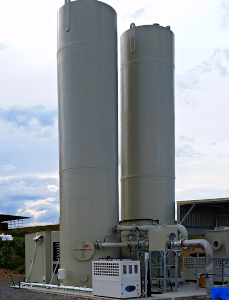
For large H2S loads (reducing levels down to below 200 ppm), two main reactor types are used:
- Biological trickling filters: A reactor where biogas passes through a media bed colonized by sulfur-oxidizing bacteria. This is highly cost-effective as it requires no expensive chemicals (OPEX is minimal).
Note: generizon, in partnership with Germany’s TS-Umweltanlagenbau, has successfully implemented several of these installations in Morocco. - Chemical reactors: These use chemical reagents to strip H2S. While more expensive to operate than biological systems, they are better for start/stop applications or handling sudden, unpredictable spikes in sulfur concentration.
Final polishing (fine cleaning):
To protect sensitive CHP engines or meet standards required for upgrading, a final polishing stage is required to reach concentrations below 50 ppm.
- Activated carbon filters: Non-impregnated and impregnated carbon pellets adsorb remaining trace gases.
- Iron hydroxide columns: Vessels filled with pellets that chemically react with H2S.
gas utilization – renewable energy – flexibility.
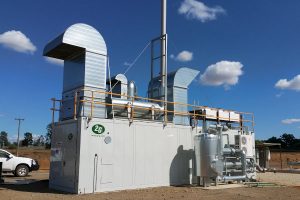
Biogas is a robust renewable energy source that, unlike intermittent solar or wind, provides a reliable 24/7/365 supply capable of meeting both base and peak loads. Utilizing safe, industrially proven technology—with over 20,000 successful installations across Europe—this storable fuel offers extreme flexibility in application. Whether used for electricity, heat, or upgraded to biomethane, its implementation depends on local energy demands, market prices for conventional fuels, and the growing economic value placed on renewable, circular-economy products.
Biogas utilization is divided into two main categories: direct usage (as-is) and upgrading (separation of constituents).
“As-Is” usage paths:
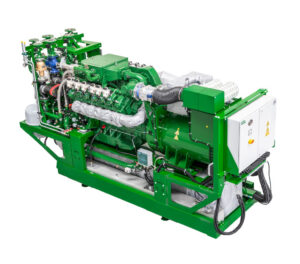
In these scenarios, the biogas is used directly after basic cleaning (moisture and H2S removal) without separating the CO2.
- Direct combustion in a boiler for steam, to decarbonize heat production in industry.
- Electricity: by means of a gas-to-power g2p generator.
- Combined heat and power CHP: Electricity and hot water.
- Tri-generation: production of electricity, heat/steam and cooling.
Upgrade paths and constituent usage:
Upgrading involves stripping the CO2 and trace gases to produce biomethane (CH4 with required purity, e.g. 96% to 99.5%). The refined gas is chemically identical to natural gas (NG). Each of these pathways can be called tri or quatro generation.
- In principle all the originally mentioned biogas pathways apply too.
- In addition biomethane can be injected into a natural gas grid.
- Biomethane can be used in natural gas vehicles – NGV for green mobility. This obviously requires a lot of new infrastructure for biomethane storage stations as well as the service stations for newly purchased gas powered trucks and buses. NGV mobility is in direct competition with battery electrical vehicles – BEV mobility which seems to be winning the low carbon mobility race.
- Compressed natural gas CNG or compressed biomethane CBM is used for transport or storage, for later usage to decarbonize industry.
- Liquefied natural gas LNG or liquefied biomethane LBM; liquefaction is done at cryogenic temperatures (-162 ° C boiling point) for transport or storage.
- Biogenic carbon dioxide capture: After purification the biogenic CO2 may be used in greenhouses, for algae production, in the food industry, in desalination plants, in advanced catalytic synthesis processes to produce fuels and chemicals (e.g. bio/e-methanol). Biogenic CO2 from AD is besides biogenic CO2 from ethanol production the cheapest source of CO2.
gas separation technologies.
The process usually involves:
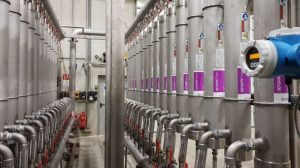
- Desulfurization, treatment and absorption of hydrogen sulfide (H2S) as described.
- Dehydration, drying through chilling of biogas.
- Biomethane production, renewable methane through separation stage of CH4 from CO2.
Too much air and N2 may constitute a problem (less with AD-biogas but more with LFG). - The separated CO2, which is biogenic, therefore climate-neutral, is regularly released into the atmosphere. Yet after several washing and absorption steps, this purified chemical CO2 has a value for a wide variety of uses.
Depending of the primarily desired product one or several common separation (upgrading) processes can be applied:
- CO2 absorption in a liquid.
- Pressure Swing Adsorption (PSA).
- Membrane separation.
- Cryogenic separation.
- Others.
residue / digestate – post treatment options.
The digestate is the solid / liquid residue of the anaerobic digestion process: It consists of
- The organic matter which is largely degraded and mineralized, organic N is converted into ammoniacal NH4-N.
- The organic part of the substrate which is indigestible like lignocellulose matter, organic N and C remain bound together.
- Dead mineralized bacteria, the former living biomass, are capable of releasing nutrients in a form that is highly accessible to plants, mineralized bacteria carry enzymes and bioactive compounds back into the soil.
Only carbon, hydrogen, and oxygen (as CH4 and CO2) leave the system as gas. On exit from the digester 85% to 95% of the initial substrate remains, nearly all the heavy minerals (N, P, K) and water stay in the digestate. Water is not lost and should return to the soil too.
If the organic input to the digester was agricultural manure, crop residuals or SSOW of known purity and provenance the digestate represents a high-quality biofertilizer rich in nutrients (N, P, K), which when applied top soil represents 100% circularity, nothing is lost, carbon, nutriments and water are recycled and will give rise to new crops.
If OFMSW, a contaminated waste stream, goes to the digester, the digestate is not usable in agriculture (contamination is not known). The digestate needs post processing, such as drying and processing to RDF, to be burnt in cement kilns.
For high-quality digestate it may make sense to separate it in a liquid and a solid phase; convert digestate respectively to
- A liquid mineral fertilizer (high in ammoniacal nitrogen NH4-N and potassium K) and
- A solid organic soil amendment (rich in C, P and K); solid digestate acts like a soil conditioner/amendment, and can also be post co-composted, improves soil structure and water retention.
AD and biogas – key advantages.
Sustainability.
- An effective form of organic waste treatment.
- 100% sustainable for the sustainable city development goal.
- Without landfilling, saves landfill space.
- Without leachate, saves on leachate treatment expenses.
- Without odors, it metabolizes in an enclosed digester.
- Decarbonized, greenhouse gas GHG emission negativity.
Circularity.
- 100% circular carbon and nutriment recycling.
- Increased bioavailability: Digestion converts organic nitrogen into ammonia nitrogen, which is more easily absorbed by plants.
- Pathogen & weed seed destruction: The heat of the digester (especially in thermophilic or steered systems) sanitizes the waste.
Renewable energy.
- Production of 24/7/365 flexible renewable energy.
- Without intermittences.
- Decarbonization of industrial heat production.
- Electricity, heat, steam, refrigeration.
- Sustainable biomethane mobility.
- Decentralized / autonomous energy production.
- Storable and transportable.
Production of industrial biogenic CO2.
- Cheapest CO2 capture and utilization.
- For advanced synthesis of chemicals and fuels.
- Bio/e-methanol and bio/e-SAF.