

In Morocco agriculture accounts for 15% of GDP, it employs 46% of the workforce.
Agricultural and agro-industrial activities generate significant quantities of organic and inorganic waste throughout the production and processing chain.
Inorganic waste streams pose a significant environmental challenge, headlined by a heavy reliance on plastics such as piping, greenhouse films, fertilizer containers, and various packaging materials. Compounding this issue is the presence of chemical residues—including fertilizers, insecticides, and herbicides—which are classified as toxic and hazardous substances. Because these materials do not degrade naturally, they require specialized disposal and recovery protocols to mitigate long-term soil and water contamination.
generizon focuses on the organic fraction of waste in agriculture.
This amounts to 52 Mt / year, among this 33 Mt of manure and slurry. The food industry sector adds another 4-5 Mt / year of organic waste.
In Morocco, organic agricultural waste streams are diverse and continuously increasing due to the growth of agricultural production and agri-food industries. While traditionally some residues are reused in agriculture, improper management can lead to environmental pollution, greenhouse gas emissions, and loss of valuable resources. However, with appropriate treatment and valorization strategies, agricultural and agro-industrial waste can be transformed into renewable energy and organic fertilizers contributing to a more sustainable and circular economy.
In a study by Bartali “Identification and characterization of organic waste in Morocco, an important step towards the valorization of waste, 2015”, the agricultural sector waste in Morocco was estimated at approximately 55 million tons per year. Biomass from the crop (plant-based) sector accounted for around 19 million tons annually. However, the livestock sector represents the largest source of organic waste within agriculture, with an estimated annual production of about 35.7 million tons of manure.
The same study estimated agro-industrial waste to represent approximately 3 million tonnes per year.
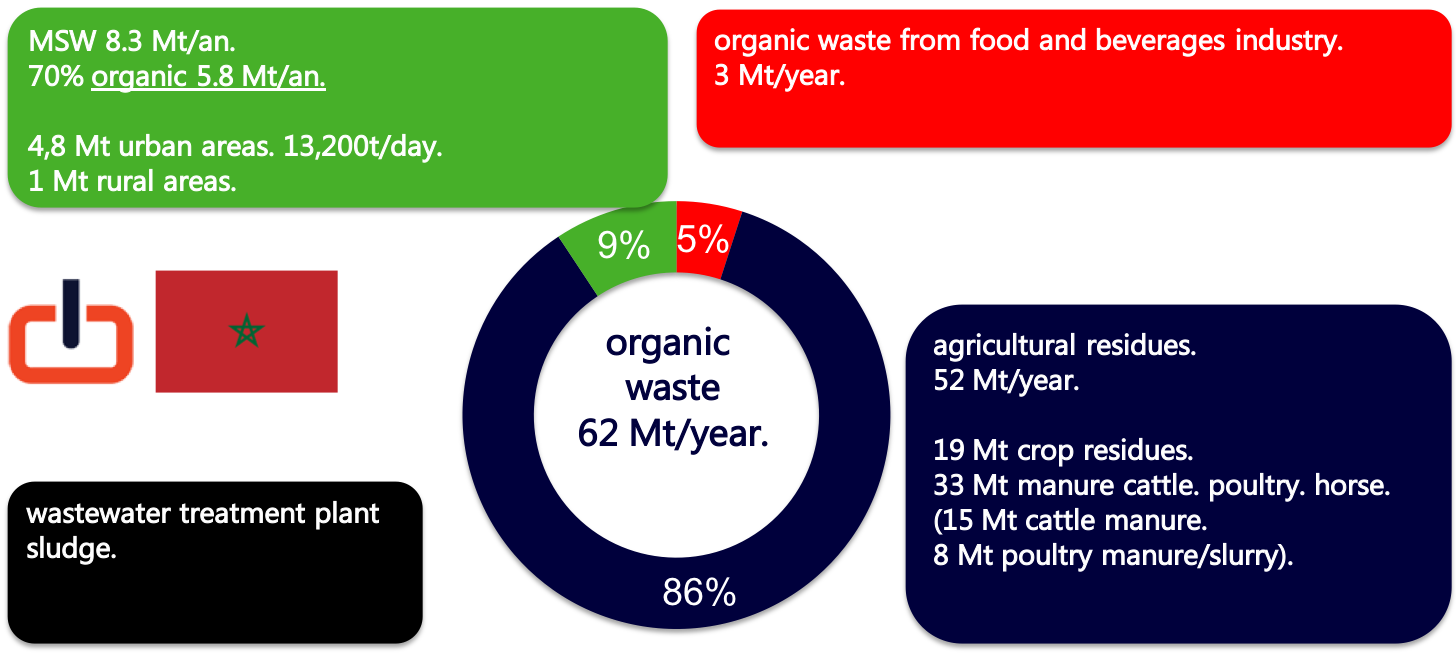
We firmly believe that total agricultural and food industry waste generation is much higher today and will continue to grow until 2030 and beyond.
livestock waste – manure and slurry.
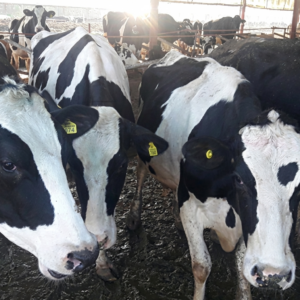
Livestock waste is a major source of agricultural waste and pollution. It includes manure, slurry, litter produced by cattle, sheep, goats, and poultry. Rich in organic matter, these wastes are traditionally used as soil amendments; however, improper management can lead to significant emissions of methane and nitrous oxide. Treatment through composting or anaerobic digestion helps reduce these emissions while producing organic fertilizers in the case of AD and renewable energy.
crop residues.
Crop residues include straw, stems, leaves, harvest residues, and pruning waste generated from cereal, vegetable, and orchard crops. These wastes are biodegradable and generally available on a seasonal basis. They are usually drier (dry biomass) than waste from animal husbandry, and can be valorized through soil amendment, composting, or energy production mainly in biomass incinerators, pelting, biochar and gasification represent even more pathways. A significant portion is still burned in open fields or left on-site.
forestry.
Forestry waste includes residues generated from forest management, logging, wood processing, and pruning activities, such as branches, bark, sawdust, wood chips, and thinning materials. Globally, these residues represent an important biomass resource that can be valorized for bioenergy production, biochar, composting, or as raw material for wood-based industries. In Morocco, forestry waste is mainly associated with forest maintenance operations, cork oak and cedar exploitation, and pruning activities in both natural forests and reforested areas. Although a portion is traditionally left in situ or used informally as fuelwood, forestry residues present significant potential for structured biomass-to-energy projects and sustainable resource management, contributing to rural development and climate mitigation efforts.
agro-food industry waste.
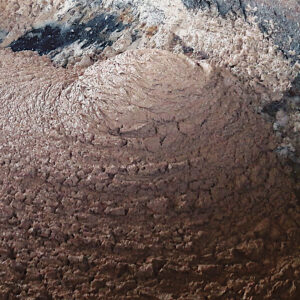
Agro-food and agro-industrial activities generate significant quantities of both solid and liquid waste streams throughout the agricultural value chain, from fruit and vegetable processing to livestock and food production. These wastes include processing by-products such as pulp, pomace, and spent grains; liquid effluents such as wastewater, dairy whey, and vinasse; biological treatment sludge; as well as crop residues, manure.
A large share of these waste streams are highly organic, highly moist, and easily fermentable, making it particularly suitable for energy recovery through processes such as anaerobic digestion. However, if not properly managed and treated, these wastes can lead to soil, water, and air pollution.
In Morocco, agro-industrial waste is estimated to represent approximately 4 to 5 million tonnes per year and is expected to continue growing until 2030 and beyond.
meat and fisheries industry waste.
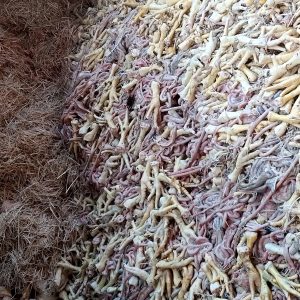
This category belongs to agro-industrial waste. This category encompasses waste from both public and private slaughterhouses—including fats, blood, offal, and digestive contents—alongside residues from fish processing. While their high organic load and associated sanitary risks necessitate strict management, not least to prevent methane emissions in landfills, these materials offer significant opportunities for circularity. By diverting these streams toward valorization pathways, they can be transformed into renewable energy through biogas production or upcycled into high-value ingredients for industries such as pet food.
wastewater treatment sludge of agro-industrial facilities.
Sludge generated from wastewater treatment plants serving agricultural and agri-food activities results from the treatment of liquid effluents. These sludges contain organic matter and nutrients, giving them potential for fertilizer use in agriculture and energy valorization, subject to compliance with sanitary and environmental standards.
In an agro-industrial facility it is utmost important to keep usable (good) food waste streams separated from toilet and chemical cleaning waste streams.
olive mill pomace and wastewater – margines d’olive.
Pressing olives produces toxic wastewater (margines) and solid pomace (grignons).
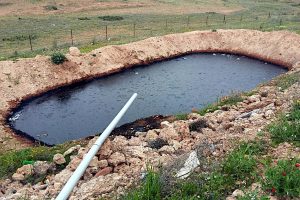
Olive mill wastewater (margine):
Margine consists of effluents resulting from olive oil extraction. It is composed of the water naturally contained in the olive drupe cells, washing water, and water used during the processing stages. The most modern olive mills (two-phase production process) generate smaller quantities of wastewater.
Due to their very high organic load and their content of phenols and polyphenols, olive mill wastewaters are difficult to biodegrade. As a result, their disposal and treatment pose significant environmental challenges.
In Morocco, the annual production of olive mill wastewater was estimated at approximately 685,000 m³ in 2021.
In AD we can use a portion of margins in small quantities (~5-12%).
Solid pomace: grignons
Olive pomace is a major by-product of the olive oil industry, generated during the extraction process. It consists of solid residues including pulp, kernel fragments, and a variable moisture fraction, depending on the extraction method used (traditional pressing or continuous two- or three-phase systems). Due to its high organic content, olive pomace represents both an environmental challenge if improperly managed (risks of mill wastewater, emissions, and odors) and a valuable resource within treatment and valorization pathways such as composting, anaerobic digestion, degasification or biomass energy production. Its recovery contributes to reducing environmental impacts and supports the integration of circular economy principles within the olive sector.
prickly pears and chicken litter.
generizoni has identified this opportunity and explored it through several ad hoc studies conducted between 2016 and 2018. The concept is based on combining two complementary feedstocks for anaerobic digestion in order to optimize process stability and energy production.
The poultry sector in Morocco produces approximately 535,000 tons of chicken meat, 120,000 tons of turkey meat, and nearly 6 billion eggs annually. As a result, chicken and laying hen slurry and manure constitute a significant nitrogen-rich substrate. However, due to their high nitrogen content, these residues can be challenging to treat alone in anaerobic digestion and therefore need to be co-digested with carbon-rich plant-based feedstocks to ensure a balanced C/N ratio and stable biogas production.
Opuntia ficus-indica (prickly pear cactus) grows naturally across many Moroccan regions. Beyond the fruit, the upper vegetative parts remaining after harvest represent a substantial and underutilized biomass resource that could be mobilized annually over thousands of hectares for anaerobic digestion. Similar co-digestion projects have already been successfully implemented in Mexico and the southern United States, demonstrating the technical feasibility of this approach.
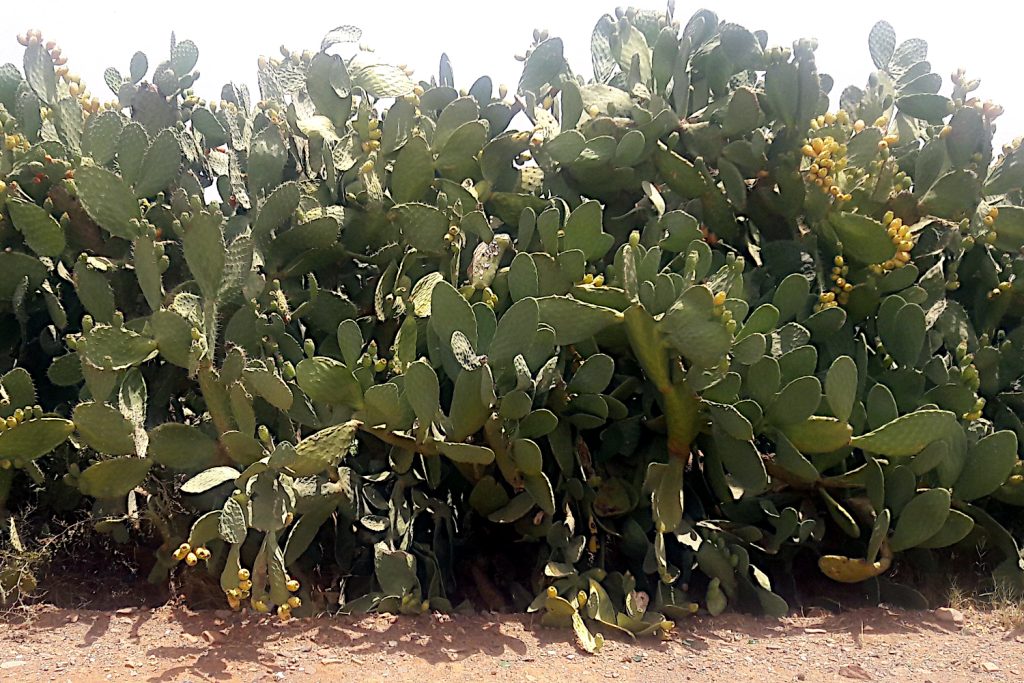
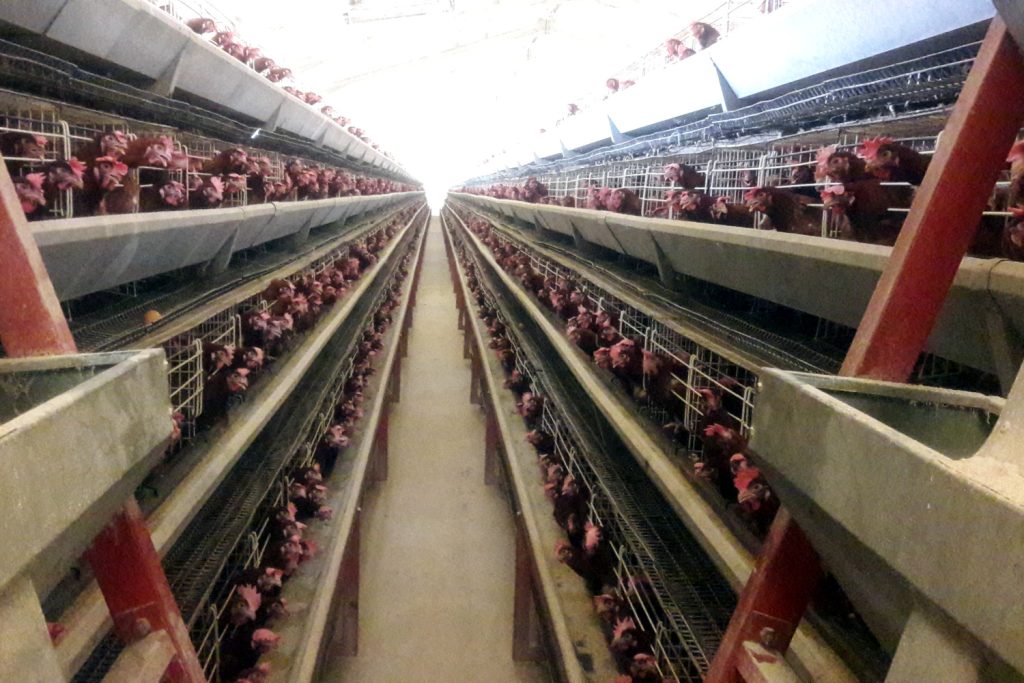
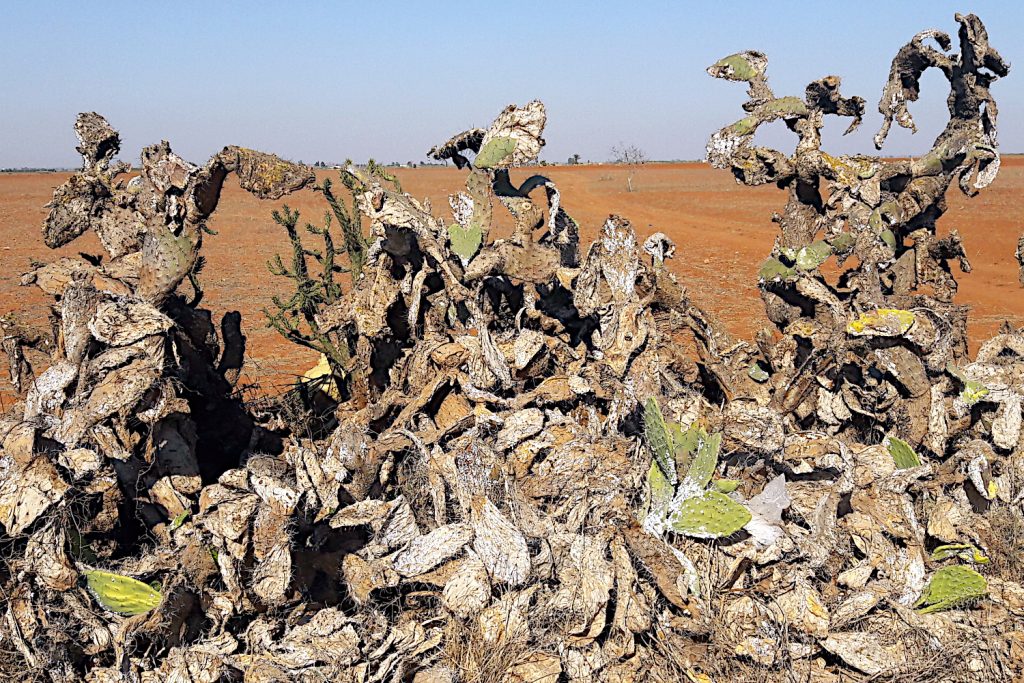
Opuntia ficus-indica has faced significant challenges in recent years. For nearly eight years, large-scale plantations across the country have been severely affected by the mealybug (cochenille) infestation, which has caused extensive damage to many prickly pear crops nationwide.
sugar bagasse – molasse – vinasse – ethanol.
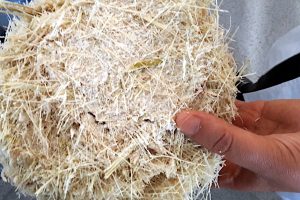
Sugarcane processing generates two key by-products that are closely linked within the same industrial chain: bagasse and molasses. During the initial crushing stage, sugarcane is pressed to extract its juice, leaving behind a fibrous solid residue known as bagasse. This material is rich in cellulose and is commonly used as fuel in biomass boilers to produce steam and electricity for the sugar mill. The extracted juice then undergoes clarification, concentration, and crystallization to produce sugar. After successive crystallization steps, the remaining viscous syrup that can no longer yield sugar crystals becomes molasses. Molasses still contains fermentable sugars and is therefore used as a substrate for ethanol production. The fermentation and distillation of molasses produce ethanol, CO2 and vinasse as a liquid by-product, which can then be valorized through anaerobic digestion to produce biogas. This biogas can contribute significantly to the energy autonomy of the production company, reducing dependence on external energy sources and improving the overall sustainability and circularity of the industrial process
Vinasse is a high-strength liquid by-product generated typically from sugarcane or sugar beet molasses fermentation and distillation processes. For every liter of ethanol produced, several liters of vinasse are generated, characterized by high organic load (COD), acidity, and significant nutrient content.
GHG emissions from agriculture.
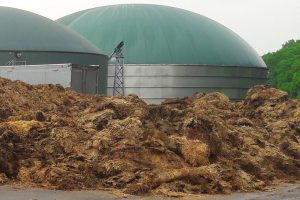
The agricultural sector accounts for 33% of global greenhouse gas emissions; in Africa, its share is higher. Animal husbandry and agrifood industrial activities are the source of more than half of the global greenhouse gas emissions.
In Morocco and elsewhere in Africa, agriculture and agroindustry contribute to GHG emissions through:
- Enteric fermentation of farmed ruminants,
- Mismanagement of manure and slurry, scraping, inadequate storage and direct spreading on land,
- Synthetic fertilizer,
- Landfilling of wet organic waste from the food industry.
The Fourth National Communication reports total methane (CH₄) emissions of 14.1 MtCO₂e per year, representing approximately 15.5% of the country’s total net greenhouse gas (GHG) emissions. Within this total, the agriculture sector accounts for roughly two-thirds (around 9 MtCO₂e/year), while the waste sector contributes about one-third (approximately 5 MtCO₂e/year).
Nitrous oxide (N₂O) emissions in Morocco, primarily associated with fertilizer application and slurry management in agriculture, reached approximately 13.1 MtCO₂e in 2018, corresponding to about 14.4% of total net GHG emissions according to the Fourth National Communication. The agricultural sector also contributed 4.4% of total CO₂ emissions (2.7 MtCO2e).
According to the Fourth National Communication, the total greenhouse gas (GHG) emissions from the agriculture sector amount to 24.8 MtCO₂e in 2018.
A set of different figures can be obtained from two other sources:
According to World Bank–referenced EDGAR data, in 2024 agricultural sector emissions are estimated at 8.31 MtCO₂e/year for CH₄ (well in line with Morocco’s 4th National Communication), 3.88 MtCO₂e/year for N₂O (well below), and 0.31 MtCO₂e/year for CO₂.
According to the World Bank, the total GHG emissions from the agriculture sector amount is 12.5 MtCO2e in 2024.Our World in Data 8.67 MtCO2e/y in 2024 of which the biggest part can be attributed to agriculture for fertilizer and manure/slurry management.
3000 dairy cows.
Livestock husbandry has a huge potential for anaerobic digestion and biogas production, as many of agriculture’s GHG emissions are linked to animal discharges, so the efficient management and recovery of manure, slurry, etc. here is the key.
We had this calculation on all these years…. basically, with three thousand dairy cows you have a project, you add some chicken litter and you have a better project. Here is very basic dairy cow project variant.
- One cow of 650kg of weight.
- 52 m3/d of slurry @ 9-10% dry matter.
- 3000 cows yield 57,000 t slurry/year.
- Potential of 1 440 000 m3 of biogas /year, continuous, 24/7/365.
- Potential of 840 000 m3 of methane /year.
- Potential of electrical production: 3 GWhel/year.
- 8220 kWhel electricity /day.
- Which returns to 114 Watt /dairy cow.
Can that be done profitably? Give us a call and we figure it out together.