ideation and pre feasibility studies.
To move a project from inspiration to a bankable reality, we follow a rigorous developmental funnel. The process begins with a one-page Concept Note that defines feedstock and associated logistical challenges, the location, the idea and proposed solution, the potential off-take, and potential ownership and the like.
generizon provides all aspects that concern technical and economic investigation of prefeasibility for anaerobic digestion (AD), LFG and similar waste-to-energy projects. This comprises simulation of benefits, analysis of sensitivities and risks, etc.
A business model is developed as part of the prefeasibility study to assess technical feasibility and the project’s financial viability. This includes the estimation of CAPEX, OPEX, and revenue streams, return on investment (ROI) estimations, and overall profitability under different scenarios. The analysis considers all potential energy and product offtake scenarios, as well as carbon revenues, with carbon credits calculated across various carbon price assumptions (tCO₂e translated into real currency). Through this approach generizon assures additionality of the mitigation project and necessary carbon financing and how this contributes to the project’s overall bankability.
A detailed prefeasibility study is the output and serves for all stakeholder engagement purposes.
feasibility studies and development.
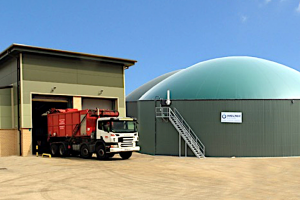
To structure an AD project effectively, the chosen model must balance risk allocation with the client’s technical capacity. If the client has the expertise to manage operations, a Direct Sale or EPC (Engineering, Procurement, and Construction) contract may be preferred. In an EPC model, generizon delivers a “turnkey” plant, assuming the design and construction risk while the client provides the capital and takes over the asset upon completion.
One emerging simple option is a Lease-to-Own structure, which functions like a financed equipment sale; some subvention through national financing organisms may come with it.
In the Energy Service Company (ESCO) framework, generizon acts as the Integrated Performance Partner, bridging the gap between technical design and financial realization by assuming the full operational and biological risks of the project. While the client provides the site, feedstock and energy offtake, Generizon’s role is to engineer the system, arrange or provide the necessary investment, and manage the long-term Operations and Maintenance (O&M) to ensure peak efficiency. Compensation is tied directly to the energy generated or savings achieved, generizon’s role is to guarantee that the impact is not just theoretical but measurable, allowing the client to benefit from a turnkey, off-balance-sheet solution while the plant successfully performs.
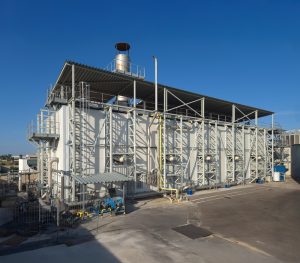
For larger-scale or municipal AD projects where the upfront capital is a hurdle, the BOT (Build-Operate-Transfer) or BOOT (Build-Own-Operate-Transfer) models are an international standard for risk mitigation. Under a BOT structure, Generizon acts as the developer, secures financing and manages the complex biological processes of the digester for a set period (e.g., 10 years or longer). This allows the client to benefit from the waste treatment and energy output without technical risk, while the investment is recovered through tipping fees, energy sales, and carbon credits.
Joint Ventures (JV) represent another way to collaborate and maximize impact, where Generizon and the feedstock provider share both the equity and the green certificates (CO₂ credits).
The delivery of a comprehensive business case and detailed feasibility study serves as the definitive technical and financial blueprint required to secure institutional bankability and finalize all project contractualization.
construction – implementation – operation and maintenance.
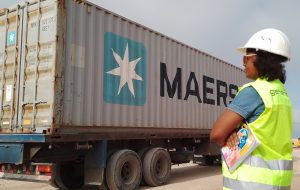
Construction and implementation is where engineering specifications are translated into robust physical infrastructure under rigorous quality control. During the construction phase, generizon supervises every technical detail—from site preparation, logistics to the installation of the main equipment, ensuring that the build aligns perfectly with the validated project design. Once commissioned, the focus shifts to long-term Operation and Maintenance (O&M), a critical phase where the generizon team and its partners manage the biological health of the system and the electro-mechanical integrity of the equipment. By providing continuous monitoring, preventive servicing and real-time process optimization, we ensure the facility maintains peak performance and safety standards throughout its entire lifecycle, protecting the investment and guaranteeing consistent environmental impact.
we are generizon.