

what gases? what gas composition?
A lot of gases are associated with or are products of anaerobic digestion (AD)—the process of bacteria microorganisms metabolically breaking down organic matter in the absence of oxygen, some are produced once we burn these products.
Landfill gas is the product of MSW degradable matter, a mix of food scraps, paper, textiles and wood. Some degrade in a matter of months, some in a matter of years. LFG is 50% methane and 50% CO2, unless the applied vacuum is too strong and drags air (N2 and O2 inside). LFG is similar to biogas, just a lot dirtier.
Biogas is the product of an AD reactor, a machine where we control feed/diet (e.g. cow manure and slurry), temperature, and control parameters such as pH or ammonia by adding trace elements, enzymes, and the like. Depending on feed methane is 50% to 75%.
Sewage gas is biogas from a digester in a wastewater sludge treatment process, basically a byproduct of cleaning toilet water. Methane is usually higher than 60%.
renewable natural gas – RNG.
Renewable natural gas is defined by two key characteristics:
- The short carbon cycle: Combustion of these biogenic gases releases carbon dioxide (CO2), but that carbon dioxide was just captured from the atmosphere through photosynthesis a year or two ago (by plants such as grass, corn, or food). Thus, the process returns carbon to the atmosphere without introducing additional fossil carbon sequestered over geological timescales.
- Double climate benefit: Capturing and combusting landfill gas or avoiding landfilling altogether provides a dual climate advantage. It prevents the release of high-global warming potential (GWP) methane into the atmosphere, while simultaneously substituting fossil fuels such as coal or natural gas, thereby reducing net carbon emissions once again.
Some more gases are present and present specific difficulties that we deal with @generizon.
H2S is always present in an AD process (more so in sewage gas), there tends to be more VOC and siloxane in LFG. N2O is mainly emitted during sewage treatment in wastewater treatment plants. NOx is a combustion product. SO2 is a combustion product.
methane – CH4.
Methane (CH₄) is classified as a Short-Lived Climate Pollutant (SLCP) and is the second most abundant Greenhouse Gas (GHG) in the atmosphere after carbon dioxide (CO₂). Since the industrial revolution, its concentration has more than doubled, largely due to human activities. Major sources include coal mining, oil and gas extraction and distribution (where leaks are common), livestock enteric fermentation, landfills, and wastewater treatment processes.
Unlike CO₂, which can persist in the atmosphere for 300 to 1,000 years, methane has a much shorter atmospheric lifetime, with a half-life of about 11.8 years. However, despite its shorter duration, methane is far more potent as a warming agent. Over a 20-year horizon, it has 86 times the global warming potential (GWP) of CO₂, and even when averaged over 100 years, it is still 27 to 30 times more powerful. This makes methane a critical target for climate mitigation strategies, as reducing emissions can deliver relatively quick benefits in slowing near-term global warming.
Methane is one of the most energy-rich forms of carbon, making it easy to convert into heat, electricity, or valuable fuels with relatively low energy input. In contrast, carbon dioxide (CO₂) is the most stable and energy-poor form of carbon, requiring significant external energy to transform it into useful products.
Landfill gas (LFG), which contains ≈50% methane (CH₄), offers a powerful opportunity to transform a potent greenhouse gas into valuable energy. At generizon, we focus on methane not just as an environmental challenge, but as a resource.
Methane is flammable and explosive between 5% (LEL) and 15% in air (UEL).
Methane is lighter than air, it is not poisonous, it is odorless and colorless, you need CH4 sensors to detect it. It is harmful to the climate.
Our goal is to turn this harmful gas into a sustainable, climate-friendly solution.
carbon dioxide – CO2.
Carbon dioxide (CO₂) is the most prevalent anthropogenic GHG and a primary driver of climate change. It is released mainly from the combustion of fossil fuels, industrial processes, electricity and heat production, transport, and Land Use, Land-Use Change and Forestry (LULUCF). Due to its long atmospheric lifetime, CO₂ accumulates in the atmosphere, trapping heat and contributing to global warming and climate instability.
In the waste sector, CO₂ is generated through the biological degradation of organic waste, landfill gas emissions, waste incineration, and CO₂ emissions from the combustion of LFG, fuels and energy used to power waste collection, transport, and treatment operations.
CO₂ emissions from the biodegradation of organic waste, as well as landfill methane combustion represent biogenic CO2, meaning it originates from recently captured atmospheric carbon and is considered climate-neutral, unlike fossil CO₂ (from fossil fuel combustion).
From a thermodynamic perspective, methane sits at the top of the energy pyramid; it is fully reduced and ready to perform work. Carbon dioxide, however, sits at the bottom—it is fully oxidized and energetically depleted. This fundamental difference in enthalpy underscores that while CH4 is a valuable fuel, CO2 is a chemical liability that requires a massive energy subsidy to recycle.
Carbon dioxide (CO₂) is not considered toxic at typical atmospheric concentrations. The current atmospheric concentration is approximately 430 ppm (0.043%), roughly double the pre-industrial level (~280 ppm), yet still far below thresholds associated with direct human health effects. CO₂ only becomes hazardous at elevated concentrations in confined or industrial environments. For example, exposure to concentrations around (2,000 – 5,000 ppm) can already lead to light sensory impairment and dizziness.
Therefore, while CO₂ is a major greenhouse gas with significant climate impact, it is not inherently toxic at ambient atmospheric levels; its health risk arises primarily at high concentrations in poorly ventilated or industrial settings.
carbon monoxide – CO.
Carbon Monoxide (CO) is the primary byproduct of substoichiometric (rich-burn) combustion, occurring when a flare or engine lacks sufficient oxygen to fully oxidize the fuel. With a molecular weight nearly identical to air, CO is a particularly insidious, odorless chemical poison. In landfill operations, the presence of CO within a biogas well is a critical indicator of a subsurface oxidation or underground burning. While not a direct greenhouse gas, CO remains a combustible intermediate, a half-burned fuel where the Carbon atom still seeks a second Oxygen atom to reach its stable CO2 state.
nitrogen – N2.
Nitrogen (N₂) is the most abundant component of the earth’s atmosphere, in dry air 78% is nitrogen and 21% oxygen, a nitrogen-to-oxygen ratio of roughly 3.76 to 1. Nitrogen is present in organic waste in the form of proteins, ammonia, and other nitrogenous compounds. In the waste sector, nitrogen plays a key role in biological processes such as composting and anaerobic digestion, where it supports microbial growth and nutrient cycling.
In a landfill gas extraction system, nitrogen is the indicator of a poorly tuned LFG reactor, pulling too much vacuum and compromising the anaerobic integrity of the landfill. The presence of N2 but zero O2 in the LFG stream indicates a biological/thermal problem in the reactor. O2 is consumed by aerobic bacteria causing a dangerous underground heat reaction (subsurface fire). Only the inert useless nitrogen is showing in the LFG stream. Controlling the applied vacuum pressure on all wells is most important.
nitrous oxide – N₂O.
N2O: Improper management of nitrogen in waste, can lead to emissions of nitrous oxide (N₂O), a potent greenhouse gas with a Global Warming Potential (GWP) nearly 300 times that of CO₂.
Nitrogen recovered from organic waste is a key nutrient for fertilizers, essential for plant growth and soil fertility. Proper nitrogen management in waste treatment allows the production of nutrient-rich compost or digestate, supporting sustainable agriculture and the circular economy.
NOx – nitrogen oxides – NO and NO2.
NOx is a combustion product which contributes to local smog and acid rain. When methane is combusted, whether in a flare, an Internal Combustion Engine (ICE), the high temperatures (above 1,300°C) cause nitrogen and oxygen in the air to react.
NOx is classified as a SLCP but not a GHG.
hydrogen sulfide – H2S.
Hydrogen Sulfide is the troublemaker of the trace gases produced by specialized bacteria called Sulfate-Reducing Bacteria. H2S is extremely corrosive and toxic.
- Odor threshold 0.0005 – 0.01 ppm (0.5 – 10 ppb): rotten egg smell.
- Safety Limit 10 – 20 ppm, the level where you must wear a respirator or exit the area.
- Olfactory Fatigue 100 – 150 ppm dangerous, The nose shuts off. You can no longer smell the gas even though it is at lethal levels.
- Unconsciousness 500 – 700 ppm, 30 to 60 minutes of exposure.
- Instant unconsciousness 700 – 1,000 ppm, death follows in minutes.
- Immediate Death 1,000+ ppm, nearly instantaneous respiratory paralysis.
In the open air of a landfill, H2S is a nuisance! Inside a pipe or a pit, it is lethal!
To an engine H2S is an equipment killer, H2S is a corrosive gas that damages pistons, cylinder liners, exhaust gas heat exchangers, and the like leading to increased maintenance.
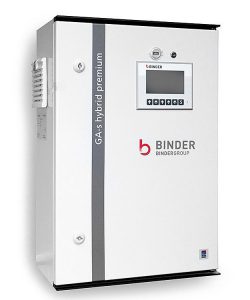
generizon provides equipment that measures H2S in a gas stream.
generizon provides desulfurization equipment.
sulfur dioxide – SO2.
SO2 is a combustion product. When H2S is combusted, it turns into Sulfur Dioxide (SO2), the primary driver of acid rain. Acid rain is an ecosystem poison for the aquatic systems and forestry alike.
It is SO2 and condensate in the exhaust gas system (acid rain) that bring damage to the exhaust gas heat exchanger.
non-methane organic compounds (NMOCs).
Non-Methane Organic Compounds (NMOCs) are volatile organic compounds (VOC) emitted during the decomposition of organic waste in landfills. Although less abundant (≈1% in LFG) than methane, NMOCs contribute to toxic air (odor) pollution and can form ground-level ozone (O3), impacting human health and the environment. Ozone is a SLCP and a GHG, but it is not found in a National Inventory Report, because it is not directly emitted from sources it is formed indirectly by VOC, NOx and CH4 through chemical reactions.
siloxans.
Silicon-based compounds are found in common consumer products: shampoos, deodorants, cosmetics, etc. widely present in MSW waste landfilled. Siloxan is equally damaging to engines, turbochargers, sparkplugs, valves, pistons, liners, etc.. When Siloxan is burnt it oxidizes and turns into Silicon Dioxide (SiO2)—which is essentially sand or quartz glass.
generizon provides equipment to scrub siloxan from the biogas/LFG stream.
ammonia – NH3 – ammonium – NH4+.
While carbon leaves the landfill as a gas, methane and CO2, nitrogen stays trapped in the water/leachate cycle for 50 to 100 years. Ammoniacal nitrogen in leachate exists in a pH-dependent equilibrium between the non-toxic ammonium ion (NH4+, a salt) and the toxic, dissolved ammonia gas (NH3). Aqueous (diluted) ammonia is a neurotoxin, it kills fish. Anhydrous ammonia (without water) is even more dangerous. Anhydrous ammonia is a carbonless fuel and H2 carrier, but now without problems.
hydrogen – H2.
Hydrogen and specifically green hydrogen has gained much importance in recent years and is covered here.
In a biogas context, in a standard anaerobic digestion, H2 is a transient intermediate, rapidly consumed by methanogens to produce methane. Attempting to harvest hydrogen directly requires sabotaging the methanogenic process—typically through heat shock or pH suppression—to stop the process at the fermentation stage. However, this is energetically counterproductive; dark fermentation alone cannot fully break down organic matter, resulting in significantly lower energy recovery compared to the full conversion into high-enthalpy methane.