studies on organic waste – MSW – biogas & digestate.
generizon has worked on major consulting projects in Morocco as well as in other West African countries, including Senegal and Côte d’Ivoire, in collaboration with institutions such as CCAC, GGGI, the Moroccan Ministry of Energy Transition and Sustainable Development (MTEDD), UN-Habitat, the Green Climate Fund, and major industrial groups. Through these projects and engagements, the company has developed strong knowledge of the waste sector in Morocco, covering technical, regulatory, institutional, and strategic aspects.
In 2021/22, generizon contributed to the development of the Organic Waste to Energy Program (OWtE) as part of the GGGI–MSConex–First Climate consortium, providing strategic studies, technical consultancy, and project structuring support for the large-scale valorisation of organic waste in Morocco. The program targets 30 anaerobic digestion projects across seven provinces, recovering clean organic waste sourced from major producers such as slaughterhouses, wholesale markets, and the agri-food industry.
generizon provided strategic advisory for the design of circular solutions that convert organic waste into biogas, renewable electricity, heat, and organic fertilizer. By significantly reducing methane emissions, the program generates carbon credits (ITMOs) under Article 6 of the Paris Agreement. Developed in cooperation with the KliK Foundation, this initiative is fully aligned with Morocco’s national energy strategy and NDC/SNDD goals.
Under this program, Generizon elaborated prefeasibility studies for OWtE projects in two regions: Rabat–Salé–Kénitra (RSK) and Tangier–Tétouan–Al Hoceima (TTA).
In addition, generizon has developed solid expertise in digestate management as a co-product of anaerobic digestion alongside biogas. This includes defining the key steps required to produce high-quality digestate with enhanced nutrient content and agronomic value, based on global benchmarking and best practices, and adapting these approaches to the Moroccan context.
In this context, generizon was involved in an advisory role in a normalization project by ONSSA (Office National de Sécurité Sanitaire des Produits Alimentaires) and IMANOR (Institut Marocain de Normalisation) that established a Moroccan digestate standard, which was approved in 2025. This work strongly supports the OWtE program, and the organic waste valorization chain through anaerobic digestion for renewable energy production.
Always within the scope of organic waste and more specifically municipal solid waste (MSW) generizon has developed strong expertise in landfill gas (LFG) emission mitigation in Moroccan landfills. This experience has enabled the team to master the IPCC First Order Decay (FOD) tool, assess energy recovery potential (electricity, heat, biogenic carbon, and propane equivalent), evaluate technology options for LFG extraction (Gas Capture and Control Systems – GCCS), and analyze alternative valorization pathways such as anaerobic digestion and composting. On the other hand, generizon also conducts assessments of the institutional, regulatory, and strategic frameworks governing the sector.
generizon hence significantly strengthened its expertise in MSW management in the Moroccan and the larger African context, consolidating its mastery of IPCC methodologies for LFG emission calculations, and leading to the development of an integrated approach to optimize methane mitigation across the solid waste sector.
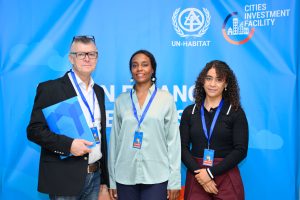
generizon conducted a study in collaboration with UN-Habitat’s Cities Investment Facility (CIF) to explore potential Waste-to-Energy (WtE) pathways in Morocco, based on the characteristics and composition of municipal solid waste (MSW). The study included SWOT analysis of multiple WtE technologies to identify the most suitable approaches, first and foremost the landfill gas (LFG) extraction system for all closed landfills, followed by anaerobic digestion using CSTR for source-separated organic waste (SSOW), plug-flow AD for organic fractions of MSW (OFMSW), green waste composting, refuse-derived fuel (RDF) production, co-incineration, and full-scale waste-to-energy incineration. The project concluded with a masterclass held at UM6P CITINNOV Rabat, bringing together several municipalities for knowledge exchange, with generizon serving as project sourcing consultants.
Power-to-X (PtX) & Power-to-Liquids (PtL) solutions.
generizon conducted several strategic studies for major industrial players exploring the production of advanced energy products and chemicals from biogas and biomass beyond conventional conversion. The studies included technology benchmarking and business cases analysis. Main topics covered bio/e methanol, sustainable aviation fuels (SAF), biofuels, and green ammonia, building a strong foundation in the scientific and chemical aspects through collaboration with renowned international scientific consultants.
Expanding its expertise, generizon also worked on a project to identify and quantify carbon sources across Morocco in three major sectors beyond waste: the power sector, the industrial sector (including cement and phosphate), and the waste and biomass sector. generizon conducted extensive research and analysis to calculate physical CO₂ emissions in these sectors, projecting future trends under both business-as-usual (BAU) and Net Zero scenarios. This work deepened generizon’s mastery of carbon sources assessment and in particular biogenic carbon sources assessment across critical sectors. By focusing on efficient carbon capture from existing sources rather than Direct Air Capture (DAC), the project advances Morocco’s Power-to-X (PtX) and Power-to-Liquids (PtL) ambitions for sustainable fuel production.
West African context.
In the African context, generizon collaborated with GGGI Senegal on a technical and economic prefeasibility study for two big agro-food industries in Senegal. The study focused on valorizing their waste into energy, with generizon assessing both the quantity and quality of the waste, conducting on-site surveys and laboratory analyses. The team also evaluated the potential for anaerobic digestion as a sustainable treatment and energy recovery solution. In addition, generizon engaged with key stakeholders and organized workshops to present the results and the action plans directly to each industry, ensuring practical insights and actionable recommendations.
generizon conducted a study in Côte d’Ivoire for a major landfill in Abidjan. The project focused on estimating LFG emissions using the IPCC tool and exploring strategies to mitigate CH4 emissions and converting them into energy. The study also strengthened generizon’s understanding of municipal solid waste management, LFG mitigation, and waste-to-energy (WtE) in the Sub-Saharan African context.