

anaerobic digestion (AD) – generizon’s magic.
Anaerobic Digestion (AD) is a biological process in which microorganisms break down organic matter in the absence of oxygen, producing biogas and stabilized digestate.
In anaerobic digestion systems we distinguish between wet/dry AD:
- Wet anaerobic digestion is designed for substrates with low dry matter content, typically below 15%. It is commonly applied to sewage sludge, food processing effluents, animal slurry, and other high-moisture organic wastes. The process usually operates in a Continuous Stirred Tank Reactor (CSTR), where continuous mixing ensures early incubation with biomass bacteria, homogeneity of substrate and efficient degradation.
- Dry anaerobic digestion, in contrast, is intended for feedstocks with higher dry matter content, generally between 20% and 40%. It is suitable for source-separated organic waste, green waste, and low-moisture agricultural residues and OFMSW (even with impurities). This technology is often implemented using plug-flow reactors (PFR) or “garage-type” systems (high-solids HSAD), with less intensive and slow or no intensive mixing. PFR are conceived by generizon as optimized for OFMSW.
Continuous – CSTR and plug-flow reactor (PFR) and Batch processing:
Wet anaerobic digestion is typically operated in continuous mode. The substrate is fed into and removed from the digester regularly (hourly or at least daily), ensuring a statistical medium hydraulic retention time (HRT).
Dry anaerobic digestion can be operated in either continuous (plug-flow) or batch (garage) mode.
generizon’s proposed plug-flow system for high solids waste (like OFMSW, green waste and even straw, and solid agricultural residues) is a continuous system, the HRT is very well defined (not statistical), the different AD-phases ensure a most effective C-degradation and biogas production.
In batch operation, the digester is loaded once, sealed for the digestion period, and biogas production occurs during the closed phase.
generizon collaborates with technology partners for the supply of CSTR, plug-flow and batch anaerobic digestion reactors.
Operating Temperature Regimes for AD
Temperature is the most important parameter and shall be kept stable.
- Mesophilic digestion operates at moderate temperatures, typically between 35 and 40 °C. It is characterized by high process stability and good tolerance to variations in organic load, making it the most widely applied configuration in industrial anaerobic digestion plants.
- Thermophilic digestion operates at higher temperatures, generally between 50 and 55 °C. This mode allows faster degradation of organic matter and improved pathogen reduction (hygienization). However, it is more sensitive to Ammonia toxicity and organic load variations, requiring stricter process control.
In certain applications where the feedstock is already available at elevated temperatures, thermophilic digestion may be preferred. This allows better utilization of existing thermal energy while accelerating biological conversion and improving overall process efficiency.
Single or multi stage AD:
Anaerobic Digestion systems can be designed as single-stage or multi-stage processes, depending on how the biological steps of digestion are managed. In a single-stage AD system, all microbial processes hydrolysis, acidogenesis, acetogenesis, and methanogenesis occur within the same reactor (continuous reactors like CSTR or non-continuous batch systems, while in a plug-flow reactor all stages occur in the same reactor, the stages happen in different sections, overlap but are in ways separated from each another).
The single stage configuration is widely used due to its simplicity, lower capital cost, and easier operation, making it suitable for relatively homogeneous substrates such as sewage sludge or manure.
In contrast, multi-stage AD systems separate these biological phases into different reactors, allowing each stage to operate under optimized conditions for specific microbial communities. This configuration is particularly advantageous for complex or highly variable substrates, such as the SSOW and agro-industrial residues from food processing industries (e.g., slaughterhouses and dairies), lignocellulosic biomass like agricultural residues and green waste, or waste streams rich in fats, oils, and grease (Fat, Oil, Grease – FOG) and also MSW/OFMSW.
Multi-stage anaerobic digestion can utilize two to four separate tanks. Very commonly are two stage rector systems:
- 1st tank: Hydrolysis, acidogenesis: ph 5.5- 6.5, 2-5 days,
- 2nd tank: Methanogeinesis: ph 6.5, 20-60 days.
- In a two-stage digester system: Acetogenesis, the bridge between Volatile Fatty Acids (VFA) and methane usually occurs at the very end of the first tank or at the beginning of the second tank.
By separating the hydrolysis and acidogenesis stages from methanogenesis, multi-stage anaerobic digestion systems allow each microbial phase to operate under optimal conditions (pH and Hydraulic Retention Time (HRT)), which improves process stability, enhances organic matter degradation, and increases biogas yields. However, these systems generally require higher capital investment and more complex operation and control. The choice between single-stage and multi-stage AD therefore depends on factors such as substrate characteristics, desired performance, operational complexity, and economic feasibility.
Digestate:
Digestate is an organic residue, rich in NPK nutrients, that can be perfectly used as a fertilizer or organic soil improver. The quantity of digestate compared to initial volume of inputs depends on process and feedstock, it varies 5-15%. The raw digestate can be very moist (from CSTR) with a dry matter content of 5-10%, it can be applied directly to agricultural soils or separated into solid and liquid fractions for specific uses. However, post-treatment, in particular hygienization, may be crucial and necessary for certain waste substrates of animal origin, to reduce the pathogen load and ensure safe agricultural use.
In Morocco, the use of digestate derived from Source Separated Organic Waste (SSOW) has lately been standardized, becoming an approved Moroccan Standard (Norme Marocaine) through regulatory standardization by ONSSA and IMANOR.
This regulation does not apply to OFMSW (organics with contamination), this digestate usually of higher DM content, cannot be applied to agricultural soils, as the contamination degree and type is usually not known.
CSTR-AD – continuous stirred tank reactor anaerobic digestion.
Wet Anaerobic Digestion, liquid or moist-AD
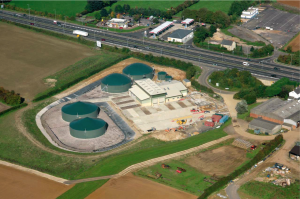
A Continuous Stirred Tank Reactor (CSTR) is a widely used type of anaerobic digester for biogas production from organic waste. It operates under continuous flow conditions, where fresh organic material is continuously fed into the reactor while an equal amount of digested material, in the form of biogas and digestate, is simultaneously withdrawn. Constant mixing within the reactor maintains optimal conditions for microbial activity by ensuring uniform temperature and substrate distribution, thereby improving digestion efficiency.
CSTR digesters are commonly applied in industrial settings such as wastewater treatment plants, food waste processing facilities, and agricultural operations. Because they are typically designed for wet anaerobic digestion, CSTR systems are particularly suitable for treating Source-Separated Organic Waste (SSOW), including residues from :
- Poultry slaughterhouses and communal abattoirs,
- Fishmongers and canning factories,
- Restaurants, hotels, and catering services,
- Markets and supermarkets,
- Fruit and vegetable sorting, conditioning, and packaging facilities,
- Food processing industries such as juice production, dairies, and oil mills,
- Other forms of wet clean organic waste.
Many of these organic waste streams, especially those originating from animal-based activities, are characterized by high moisture content and elevated nitrogen levels. This part is utmost important as high dry matter or nitrogen levels require dilution with enough water to maintain accepted DM and N-total levels in the digester.
By ensuring traceability of waste -substrate to the exact source, contamination can be largely avoided during waste production and logistics till the AD plant. Hence the resulting digestate can be directed to agricultural use in a 100% circular and sustainable way, all the water is also recycled and replaces irrigation water in agriculture.
Organic Waste-to-Energy (OWtE) program in Morocco.
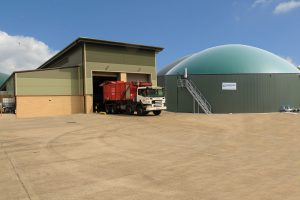
The Organic Waste-to-Energy (OWtE) program in Morocco is designed to exploit the energy potential of organic waste through the implementation of AD projects focused on energy recovery. The program seeks to divert source-separated organic waste (SSOW) streams from major producers currently disposed of in landfills towards anaerobic digestion and energy generation. Targeted waste streams include:
- Food, fruit, and vegetable waste from wholesale and municipal markets,
- Waste from public and private slaughterhouses,
- Poultry and fish waste from the food industry,
- Dairy waste, including returned products and sludge from food-related wastewater treatment plants,
- Supermarket organic waste (dairy products, fruits, and vegetables),
- Organic waste from hotels, canteens, and restaurants.
The program was initiated in 2019 by MSConex (a generizon company) in collaboration with GGGI and other partners, and developed through intensive stakeholder and authorities engagement and was validated through several concept and prefeasibility studies.
The OWtE program involves primarily organizing logistics, transporting aggregates and source-separated waste streams to treatment/digestion plants (instead of landfill) and converting waste into biogas and fertilizer (bio-digestate) through bacterial degradation of OM in anaerobic digesters.
The OWtE program involves identifying potential sources of organic matter that are readily available, in large quantities, pure and clean (uncontaminated), as well as identifying logistical challenges for waste and digestate, and selecting sites for the installation of 15 to 30 industrial-scale anaerobic digesters.
These digesters will each have a treatment capacity of 40 to 60 tonnes per day, and will be modular units in or near major agglomeration centers across Morocco.
generizon is clean. sustainable. feasible.
generizon provides first hand consulting, dimensioning, design and feasibility. We construct, operate and maintain the plant in all its forms for many years to come.
ITMO – carbon credit support for Morocco’s Organic Waste-to-Energy Program.
Based on multiple feasibility studies conducted by generizon, with support from the EIB, EBRD, the Swiss KliK Foundation, and the GCF, it became clear as early as 2018 that SSOW-based CSTR anaerobic digestion projects cannot achieve financial viability on their own.
Revenues from energy production, digestate (fertilizer) valorization, and waste tipping fees are not sufficient to sustain such projects economically.
In this context, climate finance and carbon credit revenues emerged as critical enablers. In particular, ITMOs (Internationally Transferred Mitigation Outcomes)—introduced under the 2016 Paris Agreement—were still in their early stages at that time but quickly proved to be a key mechanism for improving project bankability.
The underlying principle is that emission reductions achieved by diverting organic waste from landfills—thereby avoiding methane emissions—can be transferred internationally. These reductions can be sold to countries seeking cost-effective solutions to meet their climate commitments. For this system to function effectively, it relies on robust carbon accounting frameworks to prevent double counting, as well as independent verification of emission reductions, transparent institutional arrangements, and bilateral agreements between participating countries.
From the outset the OWtE program was designed to bring additional revenues in the form of carbon credits (ITMOs) to the project.
Revenue streams:
- Converting biogas into electricity, heat, and other energy uses.
- Generated/achieved ex-post emission reduction, carbon credits (ITMOs – Internationally Transferred Mitigation Outcomes), representing the financial value of CO₂e emission reductions in accordance with the mechanisms of the Paris Agreement.
- Fertilizer Sales.
- Waste tipping fee for each ton of waste diverted from landfilling and transformed into biogas and fertilizer.
To this end, a framework agreement was signed between Morocco and Switzerland at the 2022 Conference of the Parties (COP27) in Sham El Cheick.
The sale of these ITMOs is conducted through a partnership with the Swiss KliK Foundation, which acts as the direct buyer of emission reductions generated in Morocco. These credits are transferred to Switzerland under established, transparent contractual agreements, providing a secure financial mechanism to support Morocco’s climate mitigation projects.